The house remembers your sofa
Open a new lookbook and FLAM offers the furniture your last three were shot on, before you choose anything. A set piece is offered while it appears in at least two of your last three lookbooks, declining lets the offer fade on its own, and nothing about it is billed.
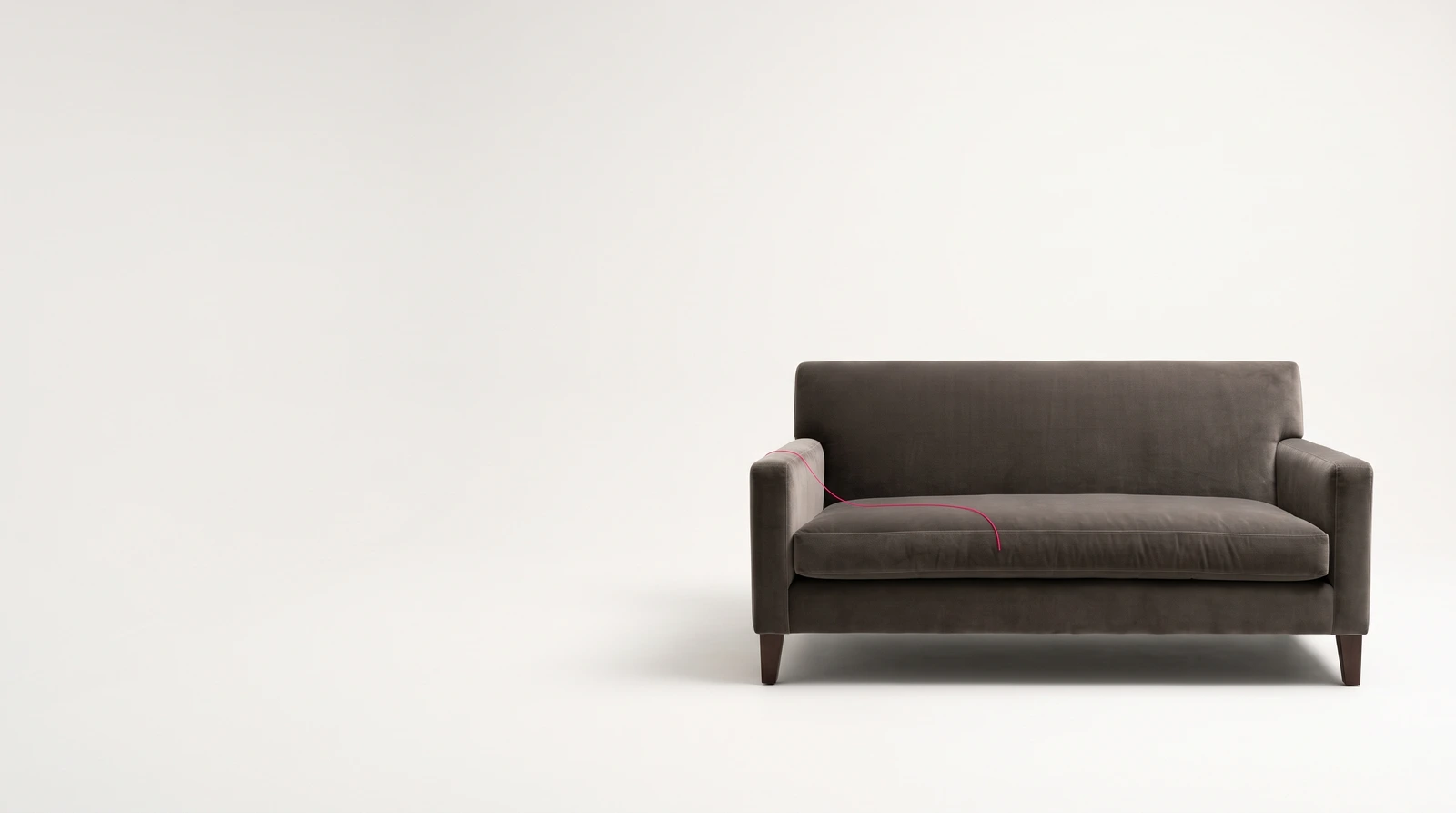
Open a new lookbook and, before you have chosen anything, the house names the furniture your last three were shot on and offers to bring it in. One tap casts it. Nothing develops and nothing is charged. This exists because a lookbook is one shoot, and one shoot happens in one room.
What does the offer say?
It says this, in the chat, the moment you tap New lookbook:
Your last three lookbooks were shot on the velvet sofa. Bring it into this one?
[ Cast the sofa ] · Not now
This costs nothing.
One tap adds the sofa to this look's cast, exactly as picking it by hand would. It creates no look and charges nothing; the look still develops only when you say so. What matters is when the line arrives: before you have touched the picker. Any tool in this category can accept an uploaded photograph of a sofa. None of them counts what you shot on last time and opens your next lookbook with it already suggested.
Why should twelve frames share one sofa?
Because a lookbook is not twelve pictures; it is one shoot. The frames have to read as though a photographer walked around one room in one afternoon. Without a cast set piece, a knitwear label shooting autumn gets frame 3 on one chair, frame 7 on another and frame 11 on a third. Nobody owns any of them. The garments are fine and the lookbook is unusable, because the eye reads the room before it reads the coat.
And the sentence a brand actually wants to say, "she sits on our bench, the ash one, in all twelve," could not be said at all until furniture became castable. That half of the work is covered in No prop is invented: filing a sofa as a set piece, holding it to its own photograph, and the instruction against inventing a chair when nothing is cast. This post is the other half: what the house does with the casts you have already made. For the mechanics of a piece riding each frame, see how props travel.
What did the house learn from your first four lookbooks?
Until now, nothing. The model persisted across lookbooks. The brand's mark persisted. The pose persisted. Everything else died with the look. A brand that shot on its own sofa in four consecutive lookbooks had told the house four times, and the house had learned nothing from any of them.
The uncomfortable part is where the answer was sitting: in a column the house already reads every time you open your lookbooks. Each look keeps its cast. Counting which piece recurs takes no new data and no new question to the server. This is not new information. It is information that was already on the screen, counted.
How does the house decide when to speak?
A piece is offered while it appears in at least two of your last three lookbooks. That is the entire rule, and the restraint in it is deliberate. There is no settings screen for it and no stored preference. The window itself is the memory: declining does not add a cast, so two declines push the piece below its own threshold and the offer stops on its own. The house forgets at exactly the rate you stop using the thing.
The window is counted in lookbooks, not in days. A brand that shoots twice a year would never clear a day window, and the signal is "this is what we shoot on," which is a per-shoot fact.
When does the house say nothing?
It stays silent for named reasons, and each refusal knows which one it is:
- Nothing has been shot on twice in your last three lookbooks.
- The piece is already cast in this look. Saying it anyway would be nagging.
- The house cannot name the piece. An upload called IMG_4471 with no readable name is never offered, because the house does not offer a thing it cannot name.
- You are in your first hour, where one voice speaks.
- You have already been spoken to twice this session.
- You are typing. The line waits instead of interrupting.
- The chat is closed. The line is held, and it speaks when you return.
A refusal that could not say which of these it is would be a bug.
What happens to a seated pose?
A pose that presupposes a seat and a set piece are a pair: either both reach the frame or neither does. Ask for a perched pose with no seat cast and the model invents furniture. Cast a sofa and, before this work, it got worse rather than better, because the frame's own header still said "seated on the studio floor." The words said floor, the reference said furniture, and the model averaged the two.
Now the header names your sofa. And when a seat cannot ride a particular frame, the pose is what yields: she sits on the floor rather than on furniture nobody owns, and the frame records that it happened. Worth telling honestly: the first attempt at this fix withdrew the sofa instead of the pose. It was reverted within the hour. A piece you cast may never be silently dropped.
What does this cost?
Nothing new. Uploading a sofa is an ordinary upload, casting it is a decision, and it rides a frame you are already paying for. No new price exists for any of this.
Two smaller decisions are worth a line each. A set piece costs one of the six pieces a look can carry, exactly like a bag; the scarcity was already priced and already explained. And the role chip on a set piece cannot be changed on the look. It is the one label that decides whether an object is worn at all, and a mis-tap would put your dress on the floor as furniture. You change it where you file the piece.
What can it not do yet?
Four things, named rather than implied.
- The house offers your own pieces only. There is no catalogue of furniture to shop from, and there is not going to be one soon. A curated catalogue needs curation, not code.
- You cannot place it. "The sofa is camera-left and she sits on the right arm" is not something you can say yet.
- The offer speaks in the chat, but the casting happens on the screen. The chat cannot create a lookbook today.
- The count covers the whole house, not one collection. If two collections shoot on different furniture, the busier one wins the suggestion. The wrong sofa is one tap to uncast.
What shipped, and when: /changelog#the-houses-set.
Questions
- Why does FLAM suggest a sofa when I open a new lookbook?
- Because your recent lookbooks were shot on it. The house counts what each look was cast with, and a set piece that appears in at least two of your last three lookbooks is offered the moment you open a new one. One tap casts it and nothing is charged.
- How do I stop the house from offering the same furniture?
- Decline it. Nothing is said again that session, and because declining does not add a cast, two declines push the piece below its two-of-three threshold and the offer stops on its own. No preference is stored anywhere.
- Does the furniture suggestion cost anything?
- No. Uploading a sofa is an ordinary upload, casting it is a decision, and the piece rides a frame you are already paying for. No new price exists for any of this.
- Can I tell the house where to place the sofa in the frame?
- Not yet. A position claim like 'the sofa is camera-left and she sits on the right arm' is not something you can direct today. You choose whether the piece is in the cast; the frame decides where it stands.
- Does the house offer furniture from a catalogue?
- No. It offers your own pieces only, counted from your own lookbooks. There is no shared catalogue of furniture to shop from, and building one would need curation rather than code.