The piece you're selling
A lookbook is shot to sell something, and until now nothing in a look said what: the close-up frame's own instructions read 'the garment' on a look carrying three. Star one piece on the cast and the lookbook comes back with a close-up of that piece on the model, named as the subject of its frame and graded against its own photograph.
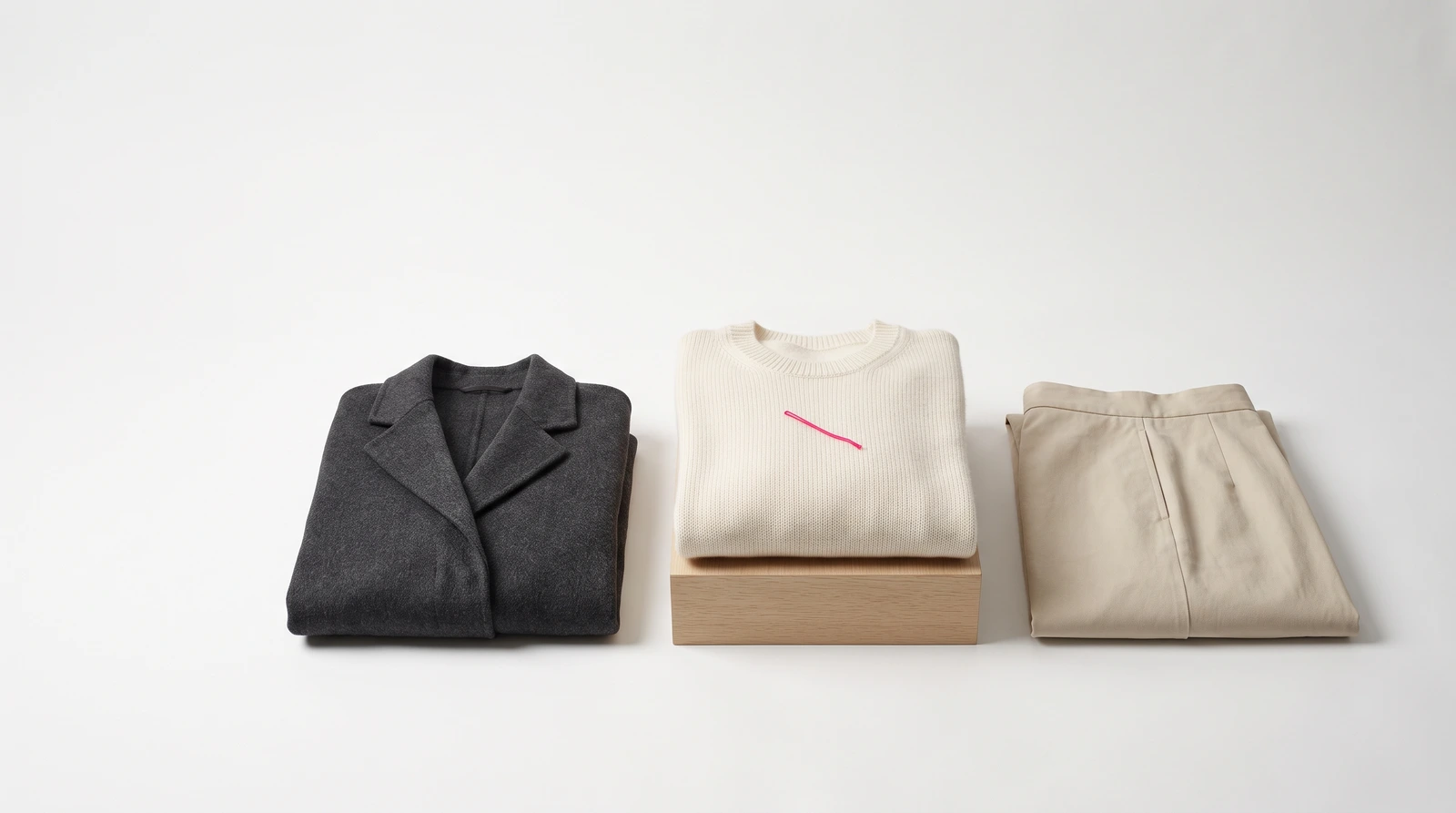
A lookbook is shot to sell something, and until now nothing in a look said what. Now one piece on the cast wears a star. The star buys it a frame of its own, a sentence that names it as the subject of that frame, and a seat at the judge's table on the frame it paid for.
Why did my close-up come back of the wrong piece?
Because the frame's own instructions named no one. The close-up's paragraph reads: "The frame is cropped tight on the front of the garment... The weave, the seams, the stitching and the way the fabric folds over the hand are the subject of the photograph." On a look carrying a coat, a knit and a skirt, "the garment" names none of them. So the image model chose. It chose differently on every frame of the same lookbook, and nothing in the file could say otherwise, because no field anywhere said which piece a frame was about.
It was worse than a missing name. The only targeting mechanism in the whole file was negative: the table that governs framing says what a crop cannot show. It is a subtraction, never a nomination. The shoes close-up worked, and it worked only by accident of that subtraction — at a knee-down crop everything above the waist is gone, so the shoes are what is left.
And the default set had no product frame at all. The four frames a director gets if she never opens the picker are one three-quarter, one medium and two full-body. A director who never touched the picker got four frames of a whole outfit and no frame of the product the lookbook exists to sell.
What was the close-up graded against?
The wrong picture, and this is the sharpest of the defects. The judge carries four references into every reading, ranked; run the arithmetic on a tight crop and the garment is the reference that gets dropped. So the tightest frame in the lookbook was being graded against a full-body frame of the same look rather than against the piece it is selling. That is fixed. On a hero frame the piece now outranks everything except the model herself, so when a close-up comes back with a different bag, the verdict is about that bag, held to its own photograph.
Who chooses the crop?
The house does. You star the piece; you are never asked which framing you want, because the answer was already derivable from a table that shipped long ago. The hero frame is the tightest crop that does not shut that piece's kind out of the picture.
- A coat, a dress, a top or a skirt gets "Fabric detail" — collarbone to hip, the cloth is the subject.
- Shoes get "Shoes and hem" — knee down.
- A bag, a necklace or an accessory gets "Carried, brought forward" — a medium frame with the piece brought to the front, because both detail crops withdraw all three entirely and neither could show them at all.
Furniture is never offered the star. The hero is what the house sells, and a sofa is not merchandise. That row simply shows no control rather than a disabled one, so there is no rule to learn.
How do I star a piece?
On the strip under your cast, the one headed "How we filed your pieces." Each row now carries a star labelled "Highlight," and starring one clears the last. It behaves like a radio but deliberately is not one, because a radio group has no way back to nothing selected, and un-starring must stay one tap.
The moment the star lands, one line appears under the strip: "The lookbook gets a close-up of that piece on the model — one frame more." The frame list and the total have already moved by the time you read it. The star's outline is always drawn, because every piece could be the one; on a star the magenta fill arrives behind that outline over a third of a second, the word "Highlighted" following just after. A look with no hero shows no colour at all, so the starred piece is the single magenta fact on the screen, readable from across the room.
Then the frame stage: the frame the star bought is already pressed in the set you confirm. You can un-press it, and the price moves in front of you. 52 tokens, drop it, 39, put it back, 52.
What does the image model receive?
One added sentence, and it names the piece. "The subject of this photograph is the quilted shoulder bag shown in reference image 3. The frame is composed for that piece: it is the reason for the photograph, it is what must read, and every other piece in the frame is context around it."
The name is the one your library filed the piece under when it landed. You never typed it, and a piece whose name never resolved falls back to its kind rather than putting a filename in front of the model. That naming machinery is the one we wrote about in no prop is invented; the star is the first thing that treats those named pieces as ranked rather than merely listed.
What does it cost?
One frame. A hero look is six frames instead of five — thirteen tokens more at the standard size. You see it, you are quoted for it, you can drop it. The frame joins the proposal you confirm; it is never appended to the develop request behind you, because a server that appended a frame there would spend a token you never confirmed.
Nothing new is priced. A hero close-up is an ordinary lookbook frame, and the house's read of it stays free.
One close-up, not two. Two would make seven frames, and the counts the house publishes would overstate.
And a look with no star compiles byte for byte what it compiled yesterday, frame for frame and token for token.
What is not here yet
- One hero per look, not two. Which three pieces a drop is about is a different question, and it deserves its own answer rather than a second star.
- A bag gets a medium frame, not a mid-thigh one. Mid-thigh is the register a handbag actually wants, and the house does not have it yet. Medium is the honest nearest thing that shipped.
- The hero is per look. It does not yet follow a piece across a whole collection.
- You cannot say it in the chat. The chat cannot create a look at all today, so the star lives on the screen. The gap is older than this feature, and we would rather name it than imply it closed.
Related
- How a lookbook is directed, end to end: the lookbook docs.
- The naming problem, first time around: no prop is invented.
- What shipped, and when: /changelog#the-hero-piece.
Questions
- Why does my AI lookbook close-up show a different garment in every frame?
- Because the close-up's instructions said 'the garment' without naming one, so on a look carrying a coat, a knit and a skirt the image model chose, and it chose differently each frame. A highlighted piece fixes this: the frame's instructions name that piece and its reference photograph as the subject, so every close-up is a close-up of the same thing.
- How do I get a close-up of a specific product in a FLAM lookbook?
- Star it. The strip under your cast lists every piece in the look; tap the star on the one the lookbook is selling and the set of frames grows by one close-up of that piece on the model. The crop is derived from the piece's kind, so you never choose a framing.
- Does highlighting a piece cost extra?
- One frame more. A look with a highlighted piece is six frames instead of five, thirteen tokens more at the standard size. The extra frame appears in the proposal you confirm, with its price, and you can drop it before anything is spent. The house's read of the frame stays free.
- Can I highlight two pieces in one look?
- No. One hero per look, because a lookbook that highlights three pieces highlights none. Starring a second piece moves the star rather than refusing your look, and un-starring is one tap back to nothing highlighted.
- Who decides the crop for the highlighted piece?
- The house does, from the piece's kind. A coat, dress, top or skirt gets a collarbone-to-hip fabric detail. Shoes get a knee-down frame. A bag, a necklace or an accessory gets a medium frame with the piece brought forward, because the tighter crops cannot show those at all.